Oxygen deprivation during labour, known as fetal asphyxia, is a rare but serious complication that can lead to stillbirth, cerebral palsy and lifelong disability.
Despite decades of advances in obstetric care, current monitoring methods remain limited, relying on cardiotocography (CTG) and heuristic rules (simple decision-making strategies or ‘rules of thumb’) that are only about 50% accurate. Mercy Health Obstetrician Gynaecologist Dr Deb Karmakar is determined to change that.
Through his work with the Obstetric Diagnostics and Therapeutics Group at the University of Melbourne, Deb and the research team have developed an artificial intelligence (AI) algorithm that uses big data to predict fetal distress in real time. Unlike conventional models, which smooth out noisy data and risk missing critical changes, this algorithm retains all raw signals, capturing subtle physiological shifts that indicate a baby is becoming unwell.
The team analysed more than two billion data points from 35,000 patients at Mercy Hospital for Women, applying machine learning and deep learning techniques to build a model that updates every 30 seconds and delivers predictions in milliseconds. The results are striking: where clinicians typically detect asphyxia with 35% accuracy, the algorithm achieved 90% sensitivity without increasing false positives.
External testing on datasets from Werribee Mercy Hospital and European cohorts confirmed its generalisability across diverse populations and hardware. This breakthrough could reduce unnecessary interventions and improve outcomes for mothers and babies worldwide.
Deb’s ultimate goal? A cloud-based decision-support tool integrated with fetal monitors, ready for clinical use by late 2026. “It’s not going to replace the clinicians. It’s going to be a decision-support,” says Deb.
This ongoing research is supported by funding from the National Health and Medical Research Council and Norman Beischer Medical Research Foundation.
Read the full story in Mercy Health’s 2024 Research Report
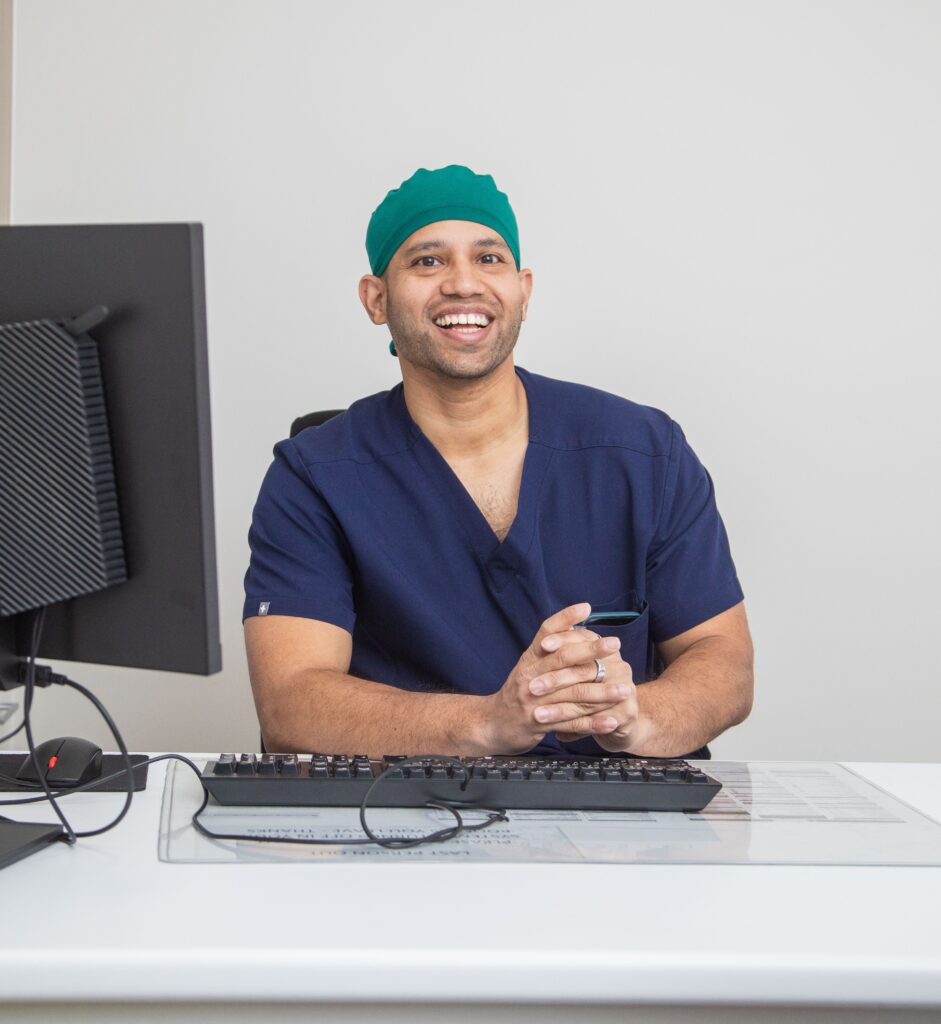
Dr Deb Karmakar