For many expectant parents, pregnancy is filled with hope, planning and anticipation. But for some families, an infection they’ve never even heard of can change everything.
Congenital cytomegalovirus (CMV) is one of the most common infections passed from mother to baby during pregnancy… and one of the least known.
In Australia, around 1 in 300 babies are born with congenital CMV each year, and hundreds will experience lifelong complications, including hearing loss, vision impairment, developmental delay and cerebral palsy.
Yet what makes this even more confronting is that many cases can be prevented.
What is CMV?
CMV is a common virus, part of the herpes virus family, that spreads through close contact with bodily fluids such as saliva and urine.
Most people will contract CMV at some stage in their lives, often without symptoms. However, when a person becomes infected during pregnancy, the virus can cross the placenta and affect the developing baby.
While many babies born with CMV are healthy, some will face lifelong disability.
Simple hygiene measures, like washing hands after contact with young children, avoiding sharing food or utensils, and not kissing children on the lips, can significantly reduce the risk. It’s awareness that makes all the difference.
The research changing lives
At Mercy Perinatal, researchers are working to change outcomes for families affected by CMV.
Leading this work is Professor Lisa Hui, a maternal fetal medicine specialist and Director of Genetics, whose research is focused on improving prevention, detection and treatment.
“Women come to me every year asking why no one ever told them about CMV. Together, we can change that and ensure safer pregnancies for generations to come.”
Through research, education and advocacy, Professor Hui and her team are helping ensure more families have the information they need when it matters most.
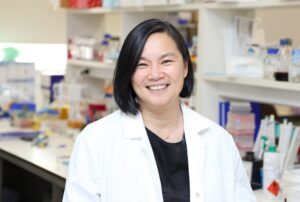
Lisa Hui
Stories that inspire change
Behind every statistic is a real family. Parents like Angela know firsthand the impact CMV can have. When she tested positive for CMV early in pregnancy with her second baby, she was terrified.
“There was no clarity and very little information. We didn’t know how CMV would affect our baby.”
There was uncertainty, and the possibility that her baby could face lifelong disability, including hearing and vision loss, cerebral palsy, developmental delays, seizures, or not complete their journey to birth.
Angela was referred to Professor Lisa Hui, and with early intervention, specialist care and antiviral treatment, her risk of CMV transmission was reduced by up to 70%.
Thanks to the care she received, Angela welcomed a beautiful baby girl, Poppy.
“Without Mercy, and their expertise, Poppy wouldn’t be in my arms.”

Angela, pregnant with Poppy
How you can help
With greater awareness, research and prevention, fewer babies will be affected by CMV.
Your support helps fund life-changing research, specialist care and education programs that empower women and families.
Click the link to find out more https://www.mercyhealthfoundation.org.au/donate and donate today.
Together, we can ensure more babies are born healthy, and more families bring their babies safely home.