Aboriginal and Torres Strait Islander women who receive culturally tailored care from the same midwife throughout pregnancy, birth and the early weeks of parenthood, are more likely to have healthy babies, according to new research published in The Lancet.
The study found the model of care significantly reduces rates of premature birth, low birthweight and neonatal intensive care admissions, while increasing the likelihood of babies being born healthy and women initiating breastfeeding.
At Mercy Hospital for Women, this care is provided through the Nangnak Baban Murrup Midwifery Group Practice, established in 2018 to provide culturally safe, relationship-based care for Aboriginal and Torres Strait Islander women. More than 110 women access the program each year, benefiting from continuity of care that supports informed choices throughout pregnancy, birth and the early weeks of parenthood.
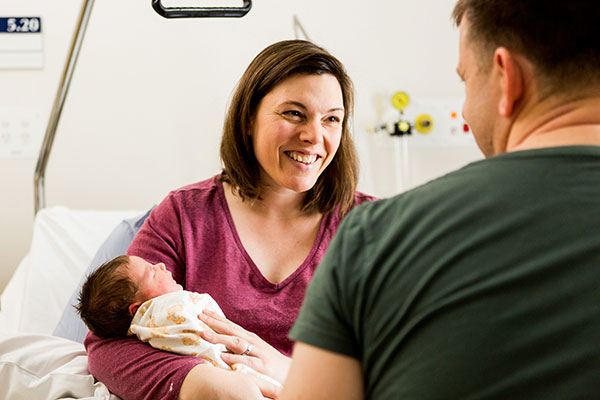
For first-time mum Sarah, the program provided reassurance from the very beginning.
“My midwives made me feel cared for, supported and that I could trust them with not just my care, but the care of my son,” Sarah said.
“They made me feel safe, which for me was really important being a first-time mum.”
Continuity of Care Manager Natalie Roberg said the strength of the program lies in the trusted relationships women build with a known midwife.
“For some Aboriginal and Torres Strait Islander women, pregnancy takes place against a backdrop of previous poor experiences with healthcare systems,” Natalie said.
“Having the same midwife throughout pregnancy allows trust to be built over time, rather than having to start from the beginning at every appointment.”
The research analysed more than 164,000 births across three Victorian maternity services, including Mercy Hospital for Women. It found babies receiving the culturally tailored continuity of midwifery care model were 45 per cent more likely to be born healthy and 33 per cent less likely to have a low birthweight and significantly less likely to require admission to a neonatal intensive care unit. Women receiving the model were also significantly more likely to begin breastfeeding.
The findings reinforce Mercy Hospital for Women’s continued commitment to Closing the Gap and improving health outcomes for Aboriginal and Torres Strait Islander families. In 2025, the hospital achieved the national target of more than 90 per cent of Aboriginal and Torres Strait Islander babies being born at a healthy birthweight.
Sarah said she would encourage other Aboriginal and Torres Strait Islander women to consider the program.
“I truly believe I couldn’t have received better care anywhere else.”
“If I could have 100 babies, I’d have them all at the Mercy.”
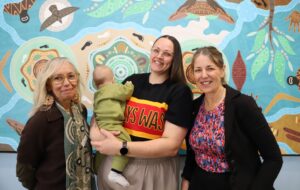
Jo Pappas, Aboriginal Programs manager at Mercy Hospital for Women; Sarah Baylis and son Jiraiya; and Prof Della Forster, Baggarrook Yurrongi program study lead author.